
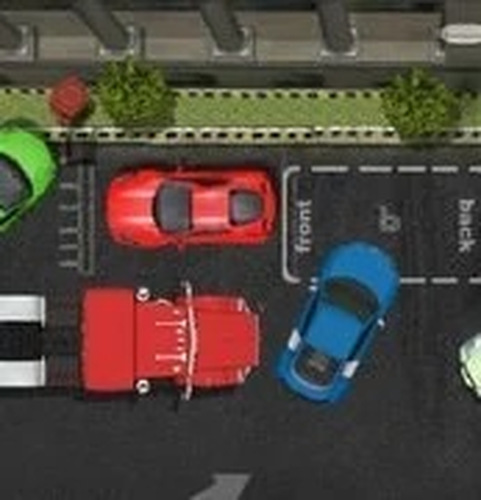
Precision Parking Challenge
What players say
Precision Parking Challenge stands out for its thoughtful level design that gradually increases difficulty without becoming punishing. The physics engine adds a layer of realism that makes even simple parking maneuvers feel engaging. Environments are distinct and well-drawn, providing visual variety that keeps the experience fresh. The controls are responsive, though mastering gentle inputs takes practice. Overall, this is a solid choice for players who enjoy skill-based driving challenges in a relaxed, arcade-style setting.
How to play
Core Gameplay Loop
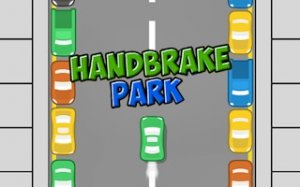
Precision Parking Challenge places players behind the wheel of a vehicle, tasking them with navigating through varied environments to park in designated spots. The primary objective is to complete each parking scenario efficiently, using on-screen controls to steer, accelerate, and brake. Success depends on careful observation of the parking area, planning the approach, and executing smooth maneuvers. The game rewards accuracy and speed, encouraging players to refine their technique with each attempt.
Environment Variety & Design
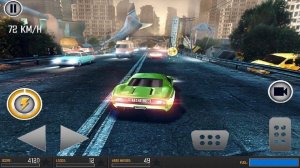
The game includes multiple settings that simulate real-world parking challenges. City streets feature narrow gaps and tight corners, while rural areas offer more open spaces but with uneven terrain. Speedways provide a different pace, requiring players to adjust from high-speed driving to precise parking. Each environment is designed with distinct visual details, from urban buildings to countryside landscapes, creating a sense of progression as players move through different scenarios.
Vehicle Physics & Control
The driving model in Precision Parking Challenge incorporates realistic physics, including weight distribution and momentum. This means that abrupt steering or harsh braking can cause the vehicle to behave differently than expected, adding a layer of depth to the parking challenges. Controls are responsive, with separate inputs for steering, acceleration, braking, and reverse. Players must learn to modulate these controls gently, especially in confined spaces, to avoid overshooting the target spot.
Progression & Difficulty Curve
As players advance, the parking scenarios become progressively more complex. Early levels introduce basic straight-in parking in open lots, while later stages require parallel parking between obstacles or navigating through narrow alleyways. The difficulty increases not only through tighter spaces but also through the addition of moving elements, such as other vehicles or pedestrians, that require heightened awareness. This gradual ramp-up ensures that players build skills steadily without becoming frustrated.
Visual & Audio Presentation
The 2D graphics in Precision Parking Challenge are clean and functional, with a focus on clarity. Each environment is rendered with enough detail to distinguish different surfaces and obstacles, while the vehicle is depicted with simple but recognizable shapes. Sound effects accompany key actions, such as engine revving, braking, and the confirmation of a successful park. The audio cues help players gauge their performance, providing feedback without being distracting.
Tips for Efficient Parking
To improve performance, players should practice smooth pedal control, using gentle taps rather than full presses. Observing the parking spot from a distance before entering helps in planning the angle of approach. Reverse parking can be useful for spots that require tight turns, and practicing this technique in open areas builds confidence. Taking time to understand how the vehicle responds to different inputs reduces errors and leads to faster completion times.





Comments
Sign in to comment
You must be logged in before posting a review or rating.
No account? Create one
No comments yet. Be the first to comment!